TLDR:
- Saft's Jacksonville facility produces lithium-ion battery containers for grid-scale energy storage, targeting 5 GWh capacity by 2027
- Originally funded by a $95.5 million federal grant in 2009, the plant represents over $200 million in total investment
- The 2024 expansion strategically positions Saft to meet Inflation Reduction Act domestic content requirements by 2026
- Jacksonville's location at Cecil Commerce Center provides logistics advantages and access to skilled workforce
- The facility will qualify customers for Investment Tax Credit bonuses while avoiding 25% tariffs on Chinese imports
What is Saft and Why Did They Choose Jacksonville?
Saft's Global Background and Ownership
Saft is a world-leading battery manufacturer with roots stretching back to 1913, when founder Victor Herold established the company over 100 years ago. Today, it operates as a wholly owned subsidiary of TotalEnergies, following a friendly acquisition completed in 2016.
This ownership structure provides Saft with the financial backing of a global energy major while allowing it to serve as TotalEnergies' "spearhead in electricity storage."
The company specializes in advanced battery technology for demanding applications:
- Energy storage systems for grid-scale renewable integration
- Transportation batteries for rail and marine applications
- Aerospace and defense power systems requiring extreme reliability
- Industrial applications in harsh environments
The company has deployed approximately 4 GWh of energy storage systems globally, establishing itself as a trusted supplier for mission-critical power applications.
Jacksonville Site Selection Process
In September 2009, Saft announced its selection of Jacksonville after evaluating multiple competing cities, choosing it as the most cost-effective option.
The company secured a 12-acre site within Cecil Commerce Center, the former Naval Air Station Cecil Field that had been transformed into an economic development zone.
Jacksonville offered several strategic advantages:
- Logistics infrastructure: Deep-water port access and proximity to major transportation corridors
- Workforce availability: Skilled manufacturing labor and technical talent pipeline
- Cost-effectiveness: Competitive real estate and operational costs compared to other finalist cities
- Incentive package: Combined city and state incentives totaling $20.2 million
The Federal Investment That Made It Possible
The project received substantial federal support through a $95.5 million grant from the U.S. Department of Energy, awarded under the American Recovery and Reinvestment Act (ARRA).
This stimulus-era funding was designed to jumpstart domestic advanced battery manufacturing and reduce U.S. dependence on foreign battery suppliers.
Saft committed to investing more than $200 million in total capital for the project, with an initial target to create 279 permanent jobs within the first six years of operation. The federal Environmental Assessment process resulted in a Finding of No Significant Impact in March 2010, clearing the way for construction.
Cecil Commerce Center: From Military Base to Manufacturing Hub
Cecil Commerce Center's transformation from Naval Air Station Cecil Field to industrial park shows successful military base reuse.
The site provides Jacksonville with ready-made industrial infrastructure—runways converted to roadways, existing utilities, and large tracts of developable land—making it an attractive location for advanced manufacturing operations like Saft's facility.
Facility Development Timeline: From Groundbreaking to Expansion
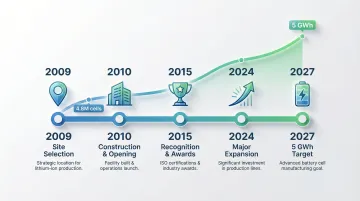
2009: The Announcement and Planning Phase
On September 8, 2009, Saft publicly announced its intent to build a 277,560-square-foot facility on 12 acres at Cecil Commerce Center. The announcement came during the depths of the Great Recession, making the project a significant economic development win for Jacksonville.
Engineers designed the facility from the outset to achieve LEED certification, incorporating sustainable design elements including what would become the largest private photovoltaic installation in the Southeast at the time.
2010: Construction and Environmental Compliance
The official groundbreaking ceremony took place on March 15, 2010, with construction completed by late fall 2010.
The DOE's Environmental Assessment (EA-1711) examined potential impacts on air quality, water resources, land use, and socioeconomics. The review ultimately issued a Finding of No Significant Impact, allowing the project to proceed without a full Environmental Impact Statement.
2015: Operational Milestones and Recognition
By October 2015, the facility had established itself as a manufacturing showcase. Florida Governor Rick Scott visited the plant, describing it as "the most advanced, automated lithium-ion battery factory in the world" and highlighting it as a model for STEM education partnerships.
Key recognitions included:
- 2014 International Company of the Year by JAXUSA Partnership
- Finalist for First Coast Manufacturers Association's Manufacturer of the Year
2024: Major Expansion Announcement
In September 2024, Saft commissioned a new production line dedicated to assembling lithium-ion battery containers for energy storage systems. This expansion represents a strategic pivot from the facility's original cell manufacturing focus to complete BESS container assembly.
The company announced plans to scale capacity to 5 gigawatt-hours (GWh) by 2027, creating additional direct and indirect employment opportunities in Northeast Florida.
The Facility's Evolution in Technology Focus
The Jacksonville facility's production capabilities have evolved significantly since 2010. Originally designed to produce 4.8 million lithium-ion cells annually, the plant now assembles complete battery containers.
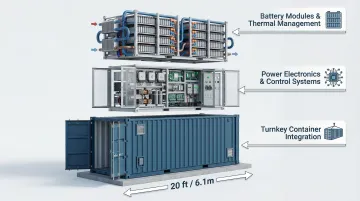
These 20-foot integrated units include:
- Battery modules with thermal management systems
- Power electronics and control systems
- Complete turnkey installation packages
This shift reflects market demand for turnkey storage solutions and positions Saft to capture more value in the storage supply chain by delivering fully integrated systems rather than just cells.
Manufacturing Capabilities and Technology at the Jacksonville Facility
Saft's Jacksonville plant produces lithium-ion battery containers for grid-scale energy storage applications. These containerized systems, marketed under the Intensium Flex and I-Shift product lines, pack up to 5.1 megawatt-hours (MWh) of storage capacity into standard 20-foot shipping containers.
Each unit uses lithium iron phosphate (LFP) cell chemistry with liquid cooling systems to maintain optimal operating temperatures.
Key technical capabilities include:
- Container assembly and integration of battery modules, inverters, and thermal management
- Module-level testing to ensure performance and safety standards
- Liquid cooling systems for temperature regulation in demanding climates
- Modular design allowing scalability from single containers to multi-hundred MWh installations
Domestic Content Compliance and Tax Incentives
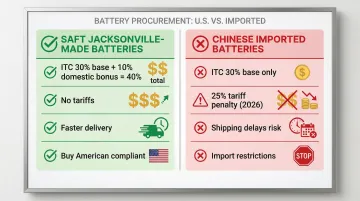
The facility's biggest competitive advantage is its domestic content compliance strategy. Saft has committed to meeting Inflation Reduction Act domestic content requirements by 2026, enabling customers to qualify for Investment Tax Credit (ITC) bonus adders.
This qualification adds 10 percentage points to the base 30% ITC, representing substantial savings on multi-million dollar storage projects. Jacksonville-manufactured Saft containers unlock significantly better project economics compared to imported alternatives—particularly as a 25% tariff on Chinese non-EV lithium-ion batteries takes effect in 2026.
Economic Impact on Jacksonville and Northeast Florida
Saft's Jacksonville facility serves as an anchor for advanced manufacturing in Northeast Florida's economy. The plant employs approximately 190 people.
The 2024 expansion is expected to create additional direct manufacturing jobs plus indirect employment in the regional supply chain.
Economic contributions include:
- Direct employment: 190+ manufacturing and engineering positions with specialized technical skills
- Supply chain development: Saft is actively building U.S.-based supplier relationships for battery components, creating opportunities for regional manufacturers
- Workforce development: Partnerships with local technical colleges and STEM education programs
- Tax revenue: Property taxes and business taxes supporting local government services
These contributions reflect over $200 million in capital investment in Duval County.
Saft repaid approximately $320,000 in incentives in 2018 for not fully meeting the initial 279-job target by 2017. However, the company's long-term commitment and 2024 expansion demonstrate its strategic view of Jacksonville as a manufacturing hub.
Recent Expansion and Future Plans: Positioning for the Energy Storage Boom
The Domestic Content Manufacturing Strategy
Saft's expansion responds to three converging market forces. First, U.S. energy storage deployments reached 22 GWh in 2023 and are projected to hit 484 GWh cumulative capacity by 2030 according to BloombergNEF. Second, the Inflation Reduction Act's domestic content requirements create substantial tax advantages for U.S.-manufactured batteries. Third, the 25% tariff on Chinese battery imports makes domestic production cost-competitive even before considering tax credits.
By manufacturing in Jacksonville, Saft can offer customers:
- ITC bonus adders worth 10 additional percentage points (potentially worth millions on large projects)
- Tariff avoidance saving 25% on imported battery costs
- Faster delivery with domestic supply chains less vulnerable to shipping disruptions
- "Buy American" compliance for utility and government projects with domestic preference requirements
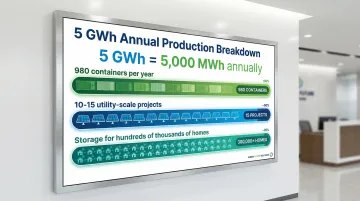
5 GWh Production Capacity Target by 2027
Saft's target of 5 GWh annual production capacity by 2027 represents substantial scale. To put this in perspective:
- 5 GWh equals 5,000 MWh of storage capacity annually
- At 5.1 MWh per container, the facility could produce approximately 980 containers per year at full capacity
- This capacity could support 10-15 utility-scale storage projects annually (typical projects range 100-500 MWh)
- Equivalent to storage for renewable energy serving hundreds of thousands of homes
The expansion creates a multi-tiered employment impact: direct manufacturing jobs at the Jacksonville facility, indirect jobs at component suppliers, and induced jobs in the broader regional economy as workers spend wages locally.
Building the US Supply Chain
Saft's strategy involves incrementally increasing domestic content by developing U.S.-based suppliers for battery components. Currently, many specialized battery materials and components come from Asian suppliers. By targeting 2026 for full domestic content compliance, Saft is working with potential suppliers to establish or expand U.S. manufacturing of cells, battery management systems, thermal management components, and power electronics.
This supply chain development creates a multiplier effect—each supplier that establishes U.S. production to serve Saft potentially serves other battery manufacturers as well, strengthening the entire domestic battery ecosystem.
Competitive Positioning in US Battery Manufacturing
Saft's 5 GWh target positions it among the mid-tier players in U.S. battery storage manufacturing. For context, Fluence also recently announced U.S. manufacturing to meet domestic content requirements, while several gigafactory projects from EV battery manufacturers are being repurposed for stationary storage.
Saft's competitive advantages include:
- TotalEnergies backing: Financial stability and long-term commitment from a global energy major
- 100+ years of battery expertise: Deep technical knowledge in demanding applications
- Established project track record: Major deployments like the 225 MWh Myrtle and Danish Fields projects in Texas
- Early domestic content compliance: Meeting IRA requirements by 2026 ahead of many competitors
Sustainability and Environmental Commitments
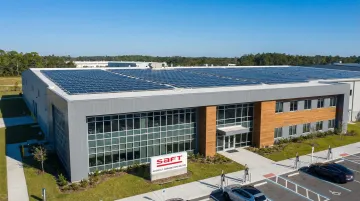
The Jacksonville facility achieved LEED Silver certification, incorporating multiple sustainable design features:
- 1-megawatt photovoltaic system that was the largest private solar installation in the Southeast at construction
- Rainwater harvesting enabling 100% reduction in irrigation water consumption
- High-efficiency HVAC reducing energy consumption
- Stormwater management protecting local water quality
- 26% recycled content in building materials
Saft has also developed recycling programs for its battery products, addressing end-of-life environmental impacts and recovering valuable materials for reuse.
Frequently Asked Questions
Is Saft a French company?
Yes, Saft is headquartered in France and operates as a wholly owned subsidiary of TotalEnergies following a 2016 acquisition. Despite French ownership, Saft maintains significant U.S. manufacturing operations including the Jacksonville facility.
Who owns Saft batteries?
TotalEnergies, a French multinational energy company, owns Saft following a 2016 acquisition. This positions Saft as TotalEnergies' battery and energy storage technology division.
Are Saft batteries good?
Saft has over 100 years of experience specializing in aerospace, defense, and industrial applications requiring extreme reliability. The company has deployed approximately 4 GWh of energy storage systems globally.
What types of batteries does Saft manufacture in Jacksonville?
The Jacksonville facility produces lithium-ion battery containers for grid-scale energy storage systems. These 20-foot containerized units contain up to 5.1 MWh of storage capacity and serve utilities, renewable developers, and large industrial customers.
How many jobs has Saft created in Jacksonville?
Saft initially targeted 279 jobs and currently employs approximately 190 people at the Jacksonville facility. The 2024 expansion to reach 5 GWh capacity by 2027 is expected to create additional direct manufacturing positions plus indirect jobs throughout the regional supply chain.
What is the significance of the Inflation Reduction Act for Saft's Jacksonville facility?
The IRA's domestic content requirements and Investment Tax Credit incentives are driving Saft's expansion by making U.S.-manufactured batteries significantly more competitive. By meeting domestic content thresholds by 2026, Saft's Jacksonville-produced containers will enable customers to qualify for ITC bonus adders worth 10 additional percentage points—potentially millions of dollars in tax savings on large storage projects.