Introduction
When an emergency power supply (EPS) battery on a Gulfstream G4SP fails a scheduled capacity test or reaches end of life, the aircraft is grounded until a certified replacement is installed. For corporate aviation operators, every day on the ground means missed trips, schedule disruptions, and real financial loss.
The Securaplane XL246-S is standard equipment on all G4SP aircraft from serial number 1278 onward, providing backup power to critical navigation, communication, and emergency lighting systems. Relying solely on OEM supply chains can stretch that grounding into weeks. This article covers the FAA-PMA approved replacement for the XL246-S — a drop-in unit with full documentation, available to ship the same day.
If you're an A&P mechanic, avionics technician, or MRO coordinator managing a G4SP AOG event, here's everything you need to know about the certified replacement option and how to get it fast.
TLDR:
- The Securaplane XL246-S provides emergency backup power to navigation, avionics, and lighting systems on the G4SP
- FAA-PMA replacement batteries meet identical airworthiness standards as OEM parts and are legally approved for installation
- Ni-Cad Systems' PMA replacement is a drop-in unit with full FAA 8130-3 documentation
- Ready stock enables same-day or next-day shipping for AOG situations
- 24/7 technical support and rental batteries minimize downtime
What Is the Securaplane XL246-S and What Does It Do?
The Securaplane XL246-S is a 24 VDC, 6 Ah sealed lead-acid emergency power supply installed on all Gulfstream G4SP aircraft since serial number 1278. As a safety-critical component, it automatically switches from the aircraft's 28 VDC bus to battery power when the main bus voltage drops below 20 VDC.
Critical systems backed up by the XL246-S include:
- IRS/INS (Inertial Reference System/Inertial Navigation System) backup power
- Avionics backup power for essential flight instruments
- Emergency lighting systems
- Communications backup power
The unit delivers short-duration emergency power during main electrical system failures, ensuring pilots retain access to critical navigation and communication equipment. Without a functioning EPS, the aircraft cannot meet airworthiness requirements for dispatch.
Replacement is triggered by several conditions during routine maintenance:
- Scheduled capacity testing per the aircraft's Maintenance Planning Document (MPD)
- Capacity degradation detected during routine testing
- Physical inspection failures (corrosion, case damage, connector wear)
- Expired manufacturer warranty periods (3 years for batteries, 5 years for electronics)
The XL246-S includes a built-in battery test function, so technicians can verify capacity without pulling the unit from the aircraft. When capacity falls below acceptable thresholds or the unit fails inspection, the aircraft is grounded until a replacement is installed and signed off.
Why Gulfstream G4SP Operators Need a Reliable Second-Source Option
Relying exclusively on OEM supply chains creates operational risk. Three-quarters of MRO survey respondents expect current supply chain challenges to last another one to three years, according to Oliver Wyman's 2023 MRO Survey. For corporate aviation operators, extended lead times mean grounded aircraft and lost revenue.
OEM-only sourcing creates compounding exposure:
- Lead times that can extend AOG situations from days into weeks
- Limited inventory availability during supply chain disruptions
- Pricing pressure with no competitive alternatives
- No fallback option when OEM stock is depleted
A "second-source" replacement in aviation refers to an FAA-PMA approved alternative manufactured to meet or exceed the performance specifications of the original part. These parts give operators and MROs a viable, cost-effective procurement option without compromising safety or airworthiness. The financial scale of the problem is hard to ignore.
In 2025, airlines incurred $3.1 billion in additional maintenance costs linked to supply chain constraints, plus $1.4 billion in excess inventory to offset parts availability risks, according to Aviation Week. Materials cost inflation continues at roughly 6.7% per year. Qualifying a PMA alternative gives operators a direct hedge against OEM lead-time delays and price spikes.

For corporate flight departments managing small fleets, a single grounded aircraft can disrupt executive travel schedules, force expensive charter bookings, and damage the department's reputation. Keeping an FAA-PMA approved EPS replacement in stock means the aircraft stays on the schedule — not in the hangar.
What FAA-PMA Approval Means for a Replacement Battery
FAA-PMA (Parts Manufacturer Approval) is a combined design and production approval issued by the FAA under 14 CFR Part 21 Subpart K. It authorizes a manufacturer to produce and sell replacement aeronautical parts. This is not a gray-market or surplus part—it's a fully regulated component that has undergone rigorous technical and regulatory evaluation.
The PMA Approval Process
To obtain PMA approval, the manufacturer must demonstrate to the FAA that their part meets the same airworthiness standards as the OEM part. This is accomplished through:
- Test and computation data proving equivalent performance
- Demonstration of identicality in design, materials, and manufacturing processes
- Compliance with applicable airworthiness requirements for the installation aircraft
FAA Advisory Circular 21.303-4 confirms that comparative methods substantiate that a PMA article is "at least equal to the original article" and that "replacement articles replicate the functionality and airworthiness of original articles."
On the "PMA Parts Are Lesser" Misconception
That certification from the FAA is the proof of airworthiness equivalency — not a manufacturer's claim. PMA parts are not "knockoffs" or "aftermarket substitutes." They are approved articles that have demonstrated compliance with the same technical standards as OEM parts, evaluated independently by the FAA itself.
Regulatory Basis for Installing PMA Parts
Per 14 CFR Part 21, PMA parts may be used as direct replacements for OEM parts on certificated aircraft. Mechanics and operators can install them without violating airworthiness requirements, unless a specific Airworthiness Directive (AD) explicitly restricts non-OEM parts — which is rare and would be stated in the AD itself.
Each PMA part must be permanently and legibly marked with "FAA-PMA" in accordance with 14 CFR § 45.15, providing visual confirmation of regulatory approval.
Ni-Cad Systems' FAA-PMA Approved Replacement for the Securaplane XL246-S
Ni-Cad Systems manufactures an FAA-PMA approved replacement battery pack for the Securaplane XL246-S emergency power supply on the Gulfstream G4SP. The company holds 30+ FAA-PMA approvals and operates a Part 145 FAA-approved repair facility in Hayward, California, with over 50 years of aviation battery manufacturing and service experience.
Technical specifications:
| Specification | Detail |
|---|---|
| Voltage | 24 VDC |
| Capacity | 6 Ah (at 1-hour rate) |
| Chemistry Options | SAFT nickel-cadmium, Marathon nickel-cadmium, Varta nickel-cadmium, Concorde lead-acid, Gill (Teledyne) lead-acid |
| Form Factor | Drop-in replacement (same mounting configuration as OEM) |
| Connector | Compatible with original XL246-S interface |
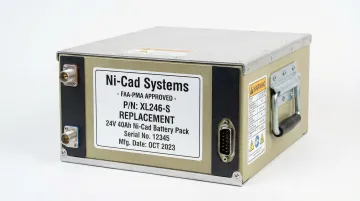
Drop-in replacement design:
The Ni-Cad Systems replacement uses the same form factor, connector type, and mounting configuration as the Securaplane XL246-S. No airframe modifications are required during installation—technicians can remove the old unit and install the PMA replacement using existing hardware and procedures.
What ships with the unit:
- FAA Form 8130-3 Airworthiness Approval Tag
- Certificate of Conformance
- Installation data and technical documentation
This paperwork provides everything a maintenance facility needs to close out the work order and document compliance in the aircraft maintenance records.
DER Authority and Field Experience:
Ni-Cad Systems has been servicing aircraft batteries since 1974 and has processed over 47,000 units. Stephen Andrues, Vice President/General Manager, is an FAA Designated Engineering Representative (DER) with 40 years of experience servicing nickel-cadmium aircraft batteries, plus A&P mechanic and pilot credentials. AOG support is available for operators who need immediate turnaround.
Ready to Ship: Why Availability Matters in AOG Situations
An emergency battery that fails a capacity check during scheduled maintenance must be replaced before the aircraft can return to service. While some MEL configurations may allow temporary deferral, operators cannot assume this applies to the G4SP without consulting their specific FAA-approved MEL. A draft FAA MMEL for related Gulfstream models lists the "EPS Maintenance Reqd" CAS message as Category C (dispatchable), but this does not automatically extend to the G4SP. Until verified in your approved MEL, treat an inoperative XL246-S as an AOG condition until your MEL confirms otherwise.
The Cost of a Grounded Aircraft
A single AOG day triggers costs across the operation:
- Charter aircraft to cover executive travel schedules
- Lost productivity from cascading schedule disruptions
- Reputational damage to the flight department
- Contract penalties for missed commitments
When OEM lead times stretch into weeks, those costs compound. In-stock PMA replacements cut the exposure at the source.
Ni-Cad Systems' Ready-to-Ship Advantage
- Same-day or next-day shipping available for confirmed AOG orders
- Rental batteries available to keep the aircraft flying while a replacement ships or is serviced
- 24/7 AOG technical support at +1 510 501 9391
How to Order
For urgent or AOG orders, contact Ni-Cad Systems directly:
- Email: Sales@NiCadSystems.com
- Phone: +1 510 785 9391 (general sales)
- 24/7 AOG Hotline: +1 510 501 9391
The team can confirm part applicability, verify stock availability, and process urgent orders for immediate shipment.
Why Ni-Cad Systems Is a Trusted Source for Aviation Emergency Batteries
Ni-Cad Systems has built a 50-year track record serving corporate aviation, airlines, and military operators. The company's credentials include:
Regulatory and Operational Credentials
- Founded in 1974
- Over 47,000 units serviced
- 30+ FAA-PMA approvals
- FAA Part 145 approved repair station
- FAA Designated Engineering Representative (DER) on staff
Team Expertise
- Over 100 years of combined aviation battery engineering and service experience
- 40+ years of nickel-cadmium battery specialization
- A&P mechanics and pilots on staff who understand operational realities
Full-Service Battery Facility
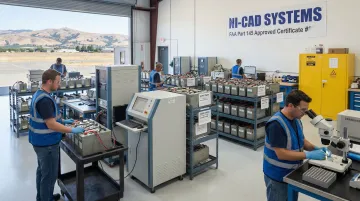
Beyond parts supply, Ni-Cad Systems operates a complete battery service facility. Gulfstream operators can consolidate their entire EPS maintenance program through one expert source:
- Capacity testing and deep-cycle testing
- Battery repair and recertification
- Storage services for customer spare batteries
- Rental batteries for immediate operational needs
- Custom battery pack manufacturing under PMA authority
24/7 Technical Support
For urgent questions about part applicability, installation procedures, or documentation requirements, Ni-Cad Systems provides direct technical support around the clock.
When you call, you reach engineers with hands-on regulatory and operational context — not a distribution warehouse call center. That distinction matters when an aircraft is AOG and paperwork has to be right.
Frequently Asked Questions
What is the Securaplane XL246-S emergency battery used for on the Gulfstream G4SP?
The XL246-S is a 24 VDC emergency power supply that provides backup power to critical avionics, navigation systems (IRS/INS), emergency lighting, and communications on the G4SP when the main electrical bus fails. It is a safety-critical component subject to regular capacity testing and scheduled replacement.
Does an FAA-PMA replacement battery meet the same airworthiness standards as the OEM Securaplane unit?
Yes. FAA-PMA approval requires the replacement part to meet the same airworthiness standards as the original, making it a direct-approved substitute for installation on certificated aircraft — unless restricted by a specific Airworthiness Directive.
How do I verify that a PMA replacement is approved for my specific aircraft tail number or configuration?
Review the PMA holder's approval data for eligible make, model, and series, then cross-reference your aircraft's IPC and maintenance manual for part number confirmation. Contact Ni-Cad Systems at +1 510 785 9391 for applicability verification specific to your tail number.
How quickly can I receive the replacement battery if my aircraft is AOG?
Ni-Cad Systems maintains ready stock and can typically ship same-day or next-day for AOG situations. Rental batteries are also available to keep the aircraft flying while a replacement is being shipped or serviced. Call the 24/7 AOG hotline at +1 510 501 9391 for immediate assistance.
What documentation comes with the FAA-PMA approved replacement battery from Ni-Cad Systems?
The unit ships with an FAA Form 8130-3 Airworthiness Approval Tag and a Certificate of Conformance, providing all required paperwork for aircraft maintenance record compliance and regulatory traceability.
Can Ni-Cad Systems also repair or recertify an existing Securaplane XL246-S rather than replace it?
As a Part 145 FAA-approved repair station, Ni-Cad Systems can evaluate, service, and recertify emergency power supply batteries. Contact Ni-Cad Systems at +1 510 785 9391 to determine whether repair or replacement is the right call for your unit.