Introduction
A dead battery doesn't just inconvenience—it grounds your aircraft, jeopardizes mission readiness, and triggers expensive emergency replacements that can cost thousands in parts and downtime. Battery failure remains one of aviation's most preventable yet costly maintenance issues.
For pilots and aircraft owners, selecting the right battery means balancing performance, reliability, and total cost of ownership against the unforgiving demands of flight operations.
Consider the operational reality: lead-acid batteries can lose up to 85% of their starting capacity in cold weather, dropping from 20 starts at 77°F to just 3 starts at 0°F. Improper battery selection or maintenance causes chronic underperformance, voltage regulation problems, and premature failure—issues that show up at the worst possible moments.
Key Takeaways
- Three battery types dominate: flooded lead-acid (cheapest), sealed AGM (maintenance-free), and lithium iron phosphate (lightest, longest life)
- Match CCAs to engine starting demands and amp-hours to emergency power needs
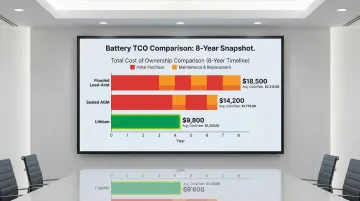
- Lithium's 8-year lifespan versus lead-acid's 2-4 years often justifies 3-5x higher upfront cost
- Capacity testing and rental programs reduce downtime while extending service life
What is an Aircraft Battery?
An aircraft battery is an electrochemical energy storage device that provides electrical power for engine starting, emergency backup power, and auxiliary systems when the engine-driven alternator or generator is not operating.
Aviation batteries use three primary chemistries:
- Lead-acid (both flooded and sealed AGM) — traditional technology with proven reliability
- Nickel-cadmium (NiCad) — robust performance in extreme temperatures with excellent cycle life
- Lithium iron phosphate (LiFePO4) — lightweight modern alternative with superior power-to-weight ratio
Each chemistry serves specific operational requirements based on weight constraints, cycle life expectations, and maintenance capabilities.
These aviation-specific requirements explain why aircraft batteries differ from automotive batteries. Aviation units are engineered for extreme weight efficiency, compact packaging, and high burst power delivery for engine starts—all while occupying minimal space in weight-critical airframes. A typical general aviation battery weighs 7-42 lbs depending on chemistry, compared to 40-60 lbs for automotive equivalents with similar capacity.
Types of Aircraft Batteries
Aircraft batteries fall into four main categories, each with distinct performance characteristics, maintenance demands, and cost profiles. Your choice affects aircraft reliability, operating expenses, and compliance requirements.
Flooded Lead-Acid Batteries
Flooded batteries use traditional "wet cell" construction with lead plates immersed in liquid sulfuric acid electrolyte. They require regular maintenance including periodic water level checks and electrolyte additions.
Advantages:
- Lowest initial cost among aviation battery types
- Tolerates deep discharge down to 20% capacity without permanent damage
- Well-established technology with widespread repair support
- Proven reliability across decades of aviation use
Disadvantages:
- Requires monthly electrolyte level checks and water additions
- Higher self-discharge rate necessitates frequent boost charging during storage
- Heavier weight (27-41.5 lbs for typical GA applications)
- Risk of acid spills during servicing or in-flight
- Shorter cycle life of 300-500 cycles typical
The Gill G-35 weighs 27 lbs when filled, while 24V models like the G-246 reach 41.5 lbs. This weight significantly impacts useful load and center of gravity calculations.
Sealed AGM (Absorbed Glass Mat) Batteries
AGM batteries absorb electrolyte in glass fiber mats between lead plates. This sealed construction eliminates water additions and maintenance requirements.
Advantages:
- Zero maintenance required—no water level checks
- 1.5x higher energy density than flooded cells in same footprint
- Lower self-discharge rate extends storage intervals
- Superior vibration resistance for rough-field operations
- Faster charge acceptance reduces alternator load time
- Non-spillable construction eliminates acid leak concerns
Disadvantages:
- Intolerant of deep discharge—should not discharge below 50% capacity
- Less forgiving of voltage regulator overcharging
- Higher initial cost than flooded lead-acid
- Permanent capacity loss if pressure relief valves open from overcharging
- Still temperature-sensitive with reduced cold-weather capacity
Concorde RG-35A AGM batteries weigh 29.5 lbs, offering minimal weight savings over flooded equivalents but eliminating maintenance labor.
While AGM batteries reduce maintenance demands, their sensitivity to deep discharge and overcharging creates new limitations. Lithium technology addresses these constraints with fundamentally different chemistry.
Lithium Iron Phosphate (LiFePO4) Batteries
LiFePO4 batteries use lithium iron phosphate chemistry with integrated Battery Management Systems (BMS) for real-time monitoring and protection. This technology emerged in aviation within the last decade.
Advantages:
- Up to 80% lighter than lead-acid—EarthX ETX680-24-TSO weighs 7.2 lbs
- 4,000+ charge cycles at 20% depth of discharge versus 300-500 for lead-acid
- Minimal self-discharge (<3% monthly) allows year-long storage without charging
- Consistent voltage output regardless of state of charge delivers reliable cranking power
- Can be mounted in any orientation without performance penalty
- No toxic heavy metals—environmentally friendly disposal
Disadvantages:
- Significantly higher upfront cost ($1,500-$3,000 vs. $400-$800 for lead-acid)
- Requires compatible charging protocols and voltage regulators
- Not all models carry FAA approval for all aircraft types
- May require STC (Supplemental Type Certificate) for installation in certificated aircraft
- Limited repair options—typically replaced rather than serviced
True Blue Power Gen5 TB40 weighs 36.6 lbs, representing 60% weight savings versus equivalent lead-acid or NiCad batteries while delivering 8-year service life.
Nickel-Cadmium (NiCad) Batteries
NiCad technology remains common in turbine aircraft and transport jets, offering longer cycle life and better temperature resilience than lead-acid batteries.
Key Characteristics:
- Excellent high-current discharge capability for turbine starting
- Performs best between 70°F-90°F operating temperature
- Suffers from memory effect with repeated partial charges
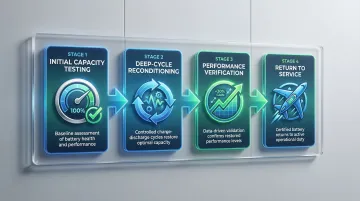
- Requires periodic reconditioning to restore full capacity
- Contains toxic cadmium requiring specialized disposal procedures
- Generally heavier than lithium alternatives
Lithium technology has largely replaced NiCads in general aviation due to weight and maintenance advantages. However, NiCads remain prevalent in turbine aircraft where replacement costs and certification complexity make upgrades impractical.
For operators maintaining NiCad or lead-acid batteries, professional testing and reconditioning services extend battery life and maintain reliability between replacement cycles.
Key Specifications to Understand
Comparing batteries requires understanding technical specifications that directly impact starting performance, operational reliability, and battery longevity. These metrics determine whether a battery meets your aircraft's electrical demands.
Cold Cranking Amps (CCA)
CCA measures the battery's ability to deliver high current for 30 seconds at 0°F while maintaining minimum voltage (7.2V for 12V battery, 14.4V for 24V battery). This specification directly predicts starting reliability in cold weather and with high-compression engines.
Why CCA Matters:
- Higher CCA means more reliable starts in winter operations
- High-compression engines demand greater starting current
- Turbocharged engines require additional cranking power
- Typical GA aircraft require 170-440 CCA for 12-volt systems
Modern permanent magnet starters draw inrush currents exceeding 150 amps (12V) or 100 amps (24V), making adequate CCA rating critical for proper starter operation and longevity.
Amp-Hour (Ah) Capacity
Beyond starting power, you need sustained capacity for avionics and emergency systems.
Amp-hour rating indicates how much current the battery can supply over time. A 35 Ah battery supplies 35 amps for 1 hour, 17.5 amps for 2 hours, or 8.75 amps for 4 hours.
Capacity Requirements:
- Determines emergency/auxiliary power duration for avionics
- Critical for IFR operations requiring extended backup power
- FAA regulations require batteries supply essential loads for continued safe flight if primary power fails
Typical GA Capacity Ranges:
| System Voltage | Capacity Range | Common Examples |
|---|---|---|
| 12V systems | 22-29 Ah | Concorde RG-25 through RG-35A |
| 24V systems | 10-19 Ah | Gill G-242 through G-246 |
Weight and Dimensions
Battery weight affects every aspect of aircraft performance, from useful load to CG calculations.
Lithium batteries deliver 40-80% weight savings—a 7.2 lb lithium battery replaces a 27-30 lb lead-acid equivalent.
Weight Considerations:
- Every pound saved increases useful load for passengers, fuel, or cargo
- Forward battery locations significantly affect CG calculations
- Performance aircraft benefit most from weight reduction
Physical dimensions must match your aircraft's battery box and mounting configuration. Some battery upgrades require modifications or STCs even when electrical specifications match.
Cycle Life and Longevity
Understanding service life helps you budget for replacements and plan maintenance schedules.
Cycle life measures complete charge/discharge cycles before capacity drops below 80% of rated capacity.
Expected Service Life:
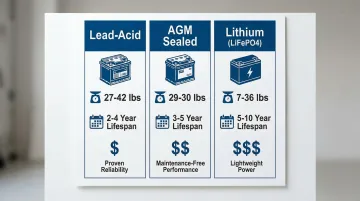
- Flooded lead-acid: 2-4 years (300-500 cycles)
- Sealed AGM: 3-5 years (higher cycle count than flooded)
- Lithium: 5-10 years (4,000+ cycles at 20% depth of discharge)
Actual lifespan depends on maintenance practices, operating environment, and charging system health. Proper maintenance can double battery service life across all chemistries.
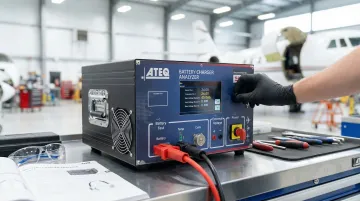
Professional capacity testing services can accurately assess remaining battery life and help you avoid unexpected failures. FAA Part 145 certified facilities use deep-cycle testing to verify specifications match manufacturer ratings.
What to Consider When Choosing the Best Aircraft Battery
The right aircraft battery depends on your specific aircraft type, mission profile, operating environment, and maintenance preferences. Each chemistry offers distinct advantages that align with different operational needs.
Aircraft Type and Engine Requirements
Match battery specifications to your engine's starting current requirements. High-compression engines, turbocharged powerplants, and cold-weather operations demand higher CCA ratings than naturally-aspirated engines in moderate climates.
Selection Factors:
- Aircraft manufacturer recommendations in POH/AFM
- Engine type and compression ratio
- Starter motor specifications and type (direct drive vs. gear reduction)
- Lightweight high-RPM starters require higher instantaneous current
Consult your aircraft's Type Certificate Data Sheet (TCDS) for approved battery models and minimum specifications before selecting alternatives.
Operating Environment and Climate
Temperature extremes significantly affect battery performance. Lead-acid batteries lose up to 85% of capacity in cold weather, meaning a battery providing 20 starts at 77°F may deliver only 3 starts at 0°F.
Climate-specific recommendations:
- Extreme cold: Sealed AGM or lithium batteries with superior cold-weather performance
- Hot climates: Lithium's low self-discharge rate and AGM's heat tolerance
- Outdoor storage: Lithium minimizes self-discharge during extended periods between flights
- Hangar storage: Any chemistry works with proper maintenance
LiFePO4 batteries operate from -40°C to +70°C with automatic internal heaters for reliable cold starts. In contrast, lead-acid electrolyte can freeze at 21°F when discharged.
Mission Profile and Usage Patterns
Flight frequency significantly impacts battery selection economics and reliability.
High-Frequency Operations (Multiple flights weekly):
- Flooded lead-acid offers lowest cost with acceptable lifespan
- Regular charging prevents sulfation and capacity loss
- Maintenance intervals align with frequent preflight inspections
Low-Frequency Operations (Weekly or less frequent):
- Lithium or AGM batteries prevent self-discharge issues
- Lower maintenance requirements suit infrequent access
- Higher upfront cost justified by extended calendar life
Special Considerations:
- IFR operations: Higher Ah capacity ensures reliable backup power duration
- Frequent short flights: Batteries tolerating frequent charging cycles
- Avionics-heavy aircraft: Higher capacity for emergency power to glass cockpits and autopilots
Maintenance Capability and Preferences
Your comfort level with routine maintenance directly influences which battery chemistry makes sense. Owner-operators comfortable with basic maintenance can save significantly with flooded lead-acid batteries requiring monthly electrolyte checks (5-10 minutes) and occasional distilled water additions.
Operators preferring minimal involvement benefit from sealed AGM or lithium options. While these carry higher upfront costs, they eliminate routine maintenance entirely and prove ideal for fleet operators and commercial operations where labor costs matter.
Total Cost of Ownership
Purchase price represents only part of the equation. Calculate TCO using: (purchase price + maintenance costs + disposal costs) ÷ expected service life.
Example TCO Comparison (12V, 35 Ah equivalent):
| Battery Type | Purchase | Maintenance | Lifespan | TCO/Year |
|---|---|---|---|---|
| Flooded Lead-Acid | $300 | $50/year × 3 years | 3 years | $150/year |
| Sealed AGM | $450 | $0 | 4 years | $112.50/year |
| Lithium | $1,200 | $0 | 8 years | $150/year |
Weight savings also factor into TCO for performance aircraft. Reducing 40 lbs improves climb rate, cruise speed, and fuel efficiency measurably.
Certification and Compatibility Requirements
Certificated aircraft have specific approved battery models listed in the Type Certificate Data Sheet (TCDS). Alternative batteries may require STCs.
Certificated Aircraft:
- Verify battery appears on TCDS or holds PMA for your airframe
- Lithium upgrades typically require STC approval
- Ensure voltage regulator settings compatible with battery chemistry
Experimental and Light-Sport Aircraft:
- Greater flexibility in battery selection
- Must ensure electrical system compatibility (voltage regulation, charging rates)
- Verify physical mounting and weight/balance considerations
FAA Advisory Circular 20-184 mandates lithium installations address unique failure modes through Battery Management Systems, thermal runaway containment, and venting systems. Working with experienced service providers who understand these regulatory requirements ensures proper installation and ongoing compliance.
How Ni-Cad Systems Can Help
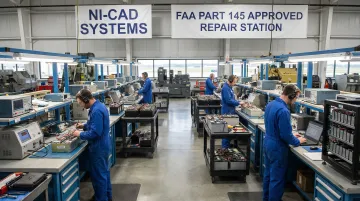
Ni-Cad Systems brings over 50 years of specialized aircraft battery expertise to corporate aviation, airlines, and military operators. Since 1974, the company has serviced more than 47,000 batteries from their FAA Part 145 approved repair facility in Hayward, California.
Beyond selling batteries, Ni-Cad Systems offers comprehensive battery servicing, FAA-PMA approved second-source alternatives, and rental batteries that minimize aircraft downtime.
Comprehensive Battery Service and Reconditioning
Ni-Cad Systems' FAA Part 145 approved repair facility services ANY nickel-cadmium or lead-acid battery, performing capacity testing, deep-cycle reconditioning, and repairs that extend battery life and delay replacement costs.
This comprehensive approach helps operators maintain airworthiness while controlling costs.
Service Capabilities:
- Capacity testing to verify airworthiness (80% threshold)
- Deep-cycle reconditioning to restore performance
- Emergency battery testing and cycling
- Fast turnaround times minimize aircraft downtime
- 24/7 technical support for AOG situations at +1 510 501-9391
Their facility has processed over 47,000 battery units, providing extensive real-world experience across diverse aircraft applications from single-engine pistons to turbine aircraft.
FAA-PMA Approved Second-Source Products
This deep service expertise translates directly into Ni-Cad Systems' product development capabilities. The company holds 30+ FAA-PMA (Parts Manufacturer Approval) approvals for second-source batteries, temperature sensors, and modification kits.
These PMA-approved alternatives often provide cost savings compared to OEM batteries while meeting identical FAA safety and performance standards.
PMA Product Portfolio:
- Battery packs for Acme/URDC AMPS500, AMPS2000, AMPS2000A systems
- Batteries for Securaplane XL246-A and XL246-S power supplies
- Battery packs for Page Aerospace emergency lighting (Falconjet aircraft)
- Temperature sensors for Canadair CL600, Cessna models (425, 441, 500, 550, S550, 552, 560, 650), and DC-10/MD-11
- Low-impedance receptacles compatible with SAFT, Marathon, G.E., and Varta systems
Recent approvals include the NCS804750 battery pack for Falcon 900/900EX/2000/2000EX aircraft and NCS390-3-1 for Citation 560XL and Citation X models.
Rental Battery Program
Ni-Cad Systems' unique rental battery service keeps aircraft operational during battery maintenance, testing, or while waiting for replacement batteries. This program minimizes costly aircraft downtime and maintains mission readiness for commercial operators and flight schools.
The rental program provides immediate solutions when "immediately isn't fast enough," ensuring your aircraft remains flight-ready while you implement permanent battery solutions or existing batteries undergo servicing.
Expert Technical Guidance
Ni-Cad Systems' team provides personalized consultation to help operators select the right battery for specific aircraft and mission requirements. Vice President Stephen Andrues brings exceptional credentials:
- 40+ years servicing aircraft batteries
- FAA Designated Engineering Representative (DER)
- A&P mechanic and pilot
- Holds 30+ FAA-PMA certifications
This combination of regulatory expertise, engineering knowledge, and operational experience enables authoritative guidance on battery selection, regulatory compliance, and performance optimization for your specific application.
Conclusion
Selecting the best aircraft battery requires understanding your aircraft's electrical demands, operating environment, and mission profile. The optimal battery choice isn't about finding the most popular or expensive option.
It's about matching battery characteristics to your specific operational priorities while balancing upfront costs against total cost of ownership.
Different operations demand different priorities:
- Weight savings for performance-focused missions
- Maintenance convenience for infrequent operations
- Cold-weather reliability for northern climates
- Maximum longevity for commercial use
Understanding the trade-offs between flooded lead-acid, sealed AGM, and lithium technologies helps you make informed decisions that enhance safety and reduce operating costs.
As you implement your battery strategy, staying current with technology developments provides ongoing advantages. Advances in lithium chemistry, integrated Battery Management Systems, and charging protocols continue improving performance and reliability.
Partnering with FAA-certified service facilities for capacity testing and deep-cycle testing ensures your aircraft remains flight-ready and your battery investment delivers maximum value. Regular professional testing catches degradation early, preventing unexpected failures and extending service life.
Frequently Asked Questions
How long should an aircraft battery last?
Expected service life varies by chemistry: flooded lead-acid lasts 2-4 years, sealed AGM 3-5 years, and lithium 5-10 years. Actual lifespan depends heavily on maintenance practices, operating environment, and charging system health—proper care can double these timeframes.
What's the difference between CCA and amp-hour ratings?
CCA (cold cranking amps) measures starting power—the battery's ability to deliver high current for engine starts in cold weather. Amp-hour (Ah) rating measures capacity for sustained power delivery to avionics and electrical systems over time. You need adequate CCA for reliable starts and sufficient Ah for emergency backup power.
Can I replace my lead-acid battery with a lithium battery?
Lithium upgrades require ensuring your voltage regulator is compatible with lithium charging profiles (14.0-14.4V for 12V systems), verifying physical fit, and obtaining an STC for certificated aircraft. Always verify electrical system compatibility before installation.
How often should I test my aircraft battery's capacity?
FAA regulations and manufacturer recommendations typically require annual capacity testing. Additionally, test batteries after deep discharge events, extended storage periods, or when starting performance degrades. Capacity below 80-85% of rated capacity indicates replacement is needed to ensure airworthiness.
What causes aircraft batteries to fail prematurely?
Common causes include voltage regulator problems (undercharging/overcharging), deep discharge events, low electrolyte levels in flooded cells, extreme temperature exposure, sulfation from inactivity, and vibration damage from improper mounting. Proper maintenance prevents most premature failures.
Should I keep my aircraft battery on a tender when not flying?
Battery tenders (smart chargers) are highly recommended for aircraft sitting more than a week between flights, as they prevent self-discharge and sulfation. Use aviation-specific or lithium-compatible tenders with proper voltage settings for your battery chemistry.