Introduction
A grounded Cessna Citation due to a faulty temperature sensor isn't just a maintenance inconvenience—it's a costly AOG event. Aircraft on Ground situations cost operators between $10,000 and $150,000 per hour when factoring in direct maintenance, lost revenue, and knock-on schedule delays. For legacy Citation operators, immediate access to an FAA-approved replacement for the Avtech 1166-1 battery temperature sensor is critical to avoiding costly dispatch delays.
The Avtech 1166-1 monitors battery thermal conditions on Cessna Citation aircraft, protecting electrical systems from hazardous overheating. Sourcing an OEM replacement, however, can mean extended lead times and high costs.
Post-2020 supply chain disruptions have hit aging business jet parts especially hard, making fast availability the main reason operators turn to PMA parts.
This post covers what the Avtech 1166-1 does, what FAA-PMA approval means, which Citation models use this sensor, and how Ni-Cad Systems offers a compliant, same-day-ship replacement solution backed by over 50 years of aviation battery expertise.
TLDR:
- Covers Citation models 425, 441, 500, 550, S550, 552, 560, and 650
- Ni-Cad Systems' FAA-PMA approved replacement installs as a direct drop-in — no modifications needed
- PMA parts are legally airworthy and meet or exceed OEM performance standards under 14 CFR § 21.303
- Same-day shipping with 24/7 AOG support from licensed A&P mechanics
- Every unit ships with FAA Form 8130-3 and complete traceability documentation
What Is the Avtech 1166-1 Temperature Sensor and Why It Matters on the Cessna Citation
Function and System Role
The Avtech 1166-1 is an essential battery temperature sensor used in the electrical systems of legacy Cessna Citation aircraft. Documented in maintenance tracking reports as the "Battery Temperature Gauge" or "Battery Temperature Sensor," this component monitors thermal output to prevent hazardous overheating in nickel-cadmium (Ni-Cd) battery installations.
According to FAA Advisory Circular 43.13-2B, Ni-Cd battery installations must feature a battery temperature sensing and over-temperature warning system. This system must include a mechanism for disconnecting the battery from its charging source in the event of an over-temperature condition to prevent structural or systemic hazards. The Avtech 1166-1 is the component that triggers that disconnect—stopping thermal runaway before it becomes a hazard.
Applicable Citation Models
The Avtech 1166-1 sensor is applicable across a wide range of the Citation fleet, including:
- Cessna 425 (Conquest I)
- Cessna 441 (Conquest II)
- Citation I/II (Models 500, 550, S550)
- Citation S/II (Model 552)
- Citation V (Model 560)
- Citation III/VI/VII (Model 650)
Ni-Cad Systems' FAA-PMA approved replacement is certified for these Cessna models, providing a direct second-source alternative to the original Avtech component.
What Happens When the Sensor Fails
A failing temperature sensor compromises the aircraft's ability to detect thermal runaway. Nickel-cadmium batteries are inherently temperature-sensitive, and a majority of reported hazardous incidents are attributed to overheating. Sensor degradation typically shows up as:
- Erratic temperature gauge readings
- False annunciator warnings
- Inability to detect actual over-temperature conditions
- System warnings that ground the aircraft
Without a functioning temperature sensor, the aircraft cannot safely monitor battery thermal conditions, triggering mandatory grounding until the component is replaced—turning a simple sensor issue into a full AOG event.
The OEM Availability Challenge
Legacy business jet operators face severe supply chain constraints for aging electrical components. High demand for engine and airframe parts means some components are completely out of stock from OEMs, resulting in extended lead times. For Citation operators who have historically sourced direct from OEMs, this means waiting weeks—or longer—for a safety-relevant part that grounds the aircraft until it arrives.
Because the sensor is a safety-relevant component under FAA regulations, any replacement must meet strict airworthiness requirements—which is where FAA-PMA approval becomes essential.
Warning Signs: When Your Avtech 1166-1 Needs Replacing
Common Failure Indicators
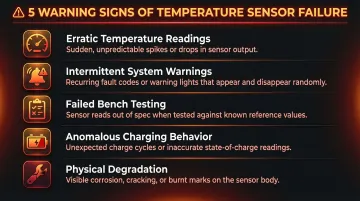
Proactive replacement during scheduled downtime is the smarter approach, especially when a drop-in PMA replacement is available with same-day shipping. Watch for these warning signs:
- Erratic temperature readings - Gauge fluctuations that don't correspond to actual battery conditions
- Intermittent system warnings - Temperature alerts that appear and disappear without pattern
- Failed bench testing - Sensor that doesn't respond correctly during capacity testing
- Anomalous charging behavior - Battery charging system acting inconsistently due to incorrect temperature data
- Physical degradation - Visible corrosion, loose connections, or damaged sensor housing
Inspection Intervals
Technicians should check or test the temperature sensor during:
- Scheduled battery capacity testing (typically every 12-24 months)
- Following any battery-related event or warning
- During major airframe inspections
- After hard landings or electrical system anomalies
- When replacing the battery pack itself
The Cost of Waiting
Unplanned emergency repairs cost up to four times more than properly scheduled preventive maintenance. Waiting for complete failure isn't a calculated risk — it's an unnecessary one. Replacing the Avtech 1166-1 proactively keeps a single inexpensive component from escalating into a full AOG event.
What FAA-PMA Approval Means — and Why It Matters More Than Price
Understanding PMA Certification
When you install a replacement part on a certificated aircraft, the FAA needs documented proof that it's airworthy — not just similar-looking. A Parts Manufacturer Approval (PMA) is that proof: a combined design and production approval for replacement articles. Under 14 CFR § 21.303, an applicant must provide test reports and computations demonstrating the design meets airworthiness requirements of the eligible product, or prove identicality to a type-certificated design.
FAA Advisory Circular 21.303-4 reinforces that PMA parts are fully approved for installation on specific type-certificated products—they are not inferior alternatives, but legally airworthy replacements.
Regulatory Standing: PMA vs. OEM
PMA parts are legally airworthy and may be used in place of OEM parts under FAA regulations. A common misconception is that PMA parts are "inferior" or require special authorization. In reality, they must meet or exceed the same performance standards as the original.
Installing a PMA part does not require a Supplemental Type Certificate (STC). Under 14 CFR § 21.113, an STC is only required when introducing a "major change in type design." PMA parts are approved replacement articles — not design changes — so they are directly interchangeable with OEM parts.
The PMA Approval Process
The approval process involves multiple layers of engineering oversight:
- Engineering analysis - Design data demonstrating compliance with airworthiness standards
- Test and computation data - Performance validation under operational conditions
- Manufacturing quality control - Documented procedures meeting 14 CFR § 21.137 requirements
- FAA review and approval - Direct FAA evaluation or DER oversight
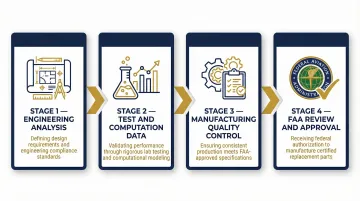
Under FAA Order 8110.37F, Designated Engineering Representatives (DERs) are authorized to determine that engineering data complies with FAA airworthiness requirements. DERs evaluate test and computation data and record their findings of compliance on FAA Form 8110-3. That means each PMA approval carries a documented engineering finding — not just a manufacturer's self-certification.
Practical Benefits for Operators
Choosing a PMA-approved part provides:
- Accepted logbook documentation - Standard maintenance entries under 14 CFR 43.9
- No STC required - Direct replacement without additional certification
- Regulatory compliance out of the box - Meets Part 91 and Part 135 requirements
- Reduced audit risk - Fully documented airworthiness for quality assurance teams
- Cost efficiency - PMA parts often cost 30% to 70% less than OEM equivalents
The Gray Market Trap
The alternative — unapproved "surplus" or gray-market parts — carries a different risk profile entirely. The FAA's Suspected Unapproved Parts (SUP) program warns that unapproved parts compromise airworthiness. AC 20-62E notes that while some surplus parts appear identical to approved ones, they may lack critical manufacturing processes — heat treating, proper testing, documented traceability.
Only PMA or OEM parts are legally airworthy for installation on certificated aircraft. Installing unapproved parts carries severe consequences, including FAA enforcement actions and certificate violations.
Ni-Cad Systems' PMA-Approved Replacement for the Avtech 1166-1
Drop-In Replacement Solution
Ni-Cad Systems offers an FAA-PMA approved replacement for the Avtech 1166-1 battery temperature sensor, designed as a direct, drop-in replacement requiring no modification to the aircraft or system. The replacement is specifically approved for Cessna models 425, 441, 500, 550, S550, 552, 560, and 650.
Company Credibility and Expertise
Ni-Cad Systems brings unmatched credibility to aviation battery systems:
- Founded 1974 - Over 50 years serving corporate, airline, and military aviation
- 30+ FAA-PMA approvals - Extensive portfolio of certified replacement components
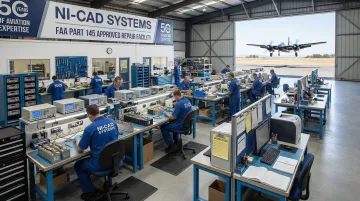
- Part 145 FAA-approved repair facility - Stringent quality control and manufacturing standards
- 47,000+ units serviced - Proven track record across five decades
- FAA Designated Engineering Representative (DER) - Stephen Andrues, Vice President/General Manager, with 40 years of NiCd battery experience and A&P mechanic credentials
Documentation Package
Every Ni-Cad Systems PMA replacement ships with complete documentation:
- FAA Form 8130-3 (Authorized Release Certificate) - satisfies airworthiness approval requirements at installation
- Traceability documentation - supports 14 CFR 43.9 maintenance record entries with full manufacturing and QC chain
- Installation data - covers torque specs, wiring interface, and logbook entry language for the applicable Cessna models
This package is structured to move directly from the shipping box into the aircraft file without additional paperwork steps.
Quality Assurance
Every unit is built and tested to FAA-approved design data. Under 14 CFR § 21.137, PMA holders must maintain strict quality control, supplier control, and inspection procedures—requirements Ni-Cad Systems exceeds through their Part 145 certification, which mandates documented inspection procedures, calibrated test equipment, and traceable material sourcing on every production run.
Contact for Availability
Technicians or procurement teams looking for the Avtech 1166-1 replacement can contact Ni-Cad Systems directly:
- Phone: +1 510 785-9391 (Monday-Friday, 8:00 AM - 6:00 PM)
- 24/7 AOG Support: +1 510 501-9391
- Email: Sales@NiCadSystems.com
The team can confirm applicability, check stock, and arrange same-day shipment for immediate operational needs.
OEM vs. PMA: Making the Smart Call for Your Citation
Side-by-Side Comparison
| Factor | OEM (Avtech/Textron) | PMA (Ni-Cad Systems) |
|---|---|---|
| Regulatory Compliance | Type Certificate basis | 14 CFR § 21.303 PMA approval |
| Airworthiness | Fully approved | Fully approved (legally equivalent) |
| Availability/Lead Time | Subject to extended backorders | High on-shelf availability; same-day ship |
| Documentation | Standard 8130-3 | FAA Form 8130-3 + traceability |
| Technical Support | OEM service desk | 24/7 direct A&P/DER support |
| Typical Cost | Baseline catalog price | 30-70% less than OEM |
| Installation | Direct replacement | Direct replacement (no STC) |
When OEM Is the Right Choice
OEM parts make sense when:
- The part is still actively produced
- Warranty coverage specifically requires OEM components
- Fleet standardization mandates OEM-only procurement
- Lead time is not a constraint
When PMA Is the Smarter Call
PMA parts are the practical choice when:
- Legacy Citation components are discontinued or stuck on extended backorder
- An AOG situation requires same-day shipping to prevent costly downtime
- Fleet cost reduction matters and compliance cannot be compromised
- You're building a proactive spare parts inventory from a reliable second source
- OEM support for older models has become inconsistent or unavailable
The data supports this shift. For legacy Cessna Citation operators, PMA second-source parts are often the most practical path to airworthiness when OEM availability is unreliable. An Aviation Week/Naveo survey found that nearly 60% of respondents expect their PMA usage to rise. Of those, 94% cited long lead times as a moderately to extremely important factor in their purchasing decisions.
Same-Day Shipping and AOG Support
The AOG Reality
Every hour on the ground has a real cost. Boeing estimates that AOG situations cost airlines between $10,000 and $150,000 per hour, depending on the aircraft type and route. A single day on the ground can cost roughly $50,000 to $150,000, factoring in direct maintenance, expedited logistics, and lost revenue.
For charter operators, the impact extends beyond direct costs to include:
- Lost revenue from cancelled flights
- Schedule disruptions affecting multiple trips
- Contract penalties for missed commitments
- Customer relationships and reputation damage
- Crew repositioning and accommodation costs

When the clock is running, same-day availability on a replacement sensor isn't a nice-to-have — it's what keeps the operation moving.
Ni-Cad Systems' Same-Day Capability
Ni-Cad Systems keeps critical PMA replacement components in stock for immediate shipment. Same-day shipping is available for orders placed by the cutoff time. For specific cutoff times and shipping options, contact the team at +1 510 785-9391 or Sales@NiCadSystems.com.
Rental batteries are also available for immediate operational needs — keeping aircraft flying while the replacement components are being installed.
24/7 Technical Support
Maintenance teams can reach a knowledgeable person—not a call center—when troubleshooting under pressure. Ni-Cad Systems provides 24/7 AOG technical support at +1 510 501-9391, staffed by experienced professionals with decades of combined engineering and service experience.
This direct access to A&P mechanics and DER-level engineering expertise ensures that technicians get accurate, actionable guidance during critical maintenance events—particularly valuable when working on legacy Citation electrical systems.
Frequently Asked Questions
What is the Avtech 1166-1 temperature sensor used for on the Cessna Citation?
The Avtech 1166-1 monitors battery temperature within the aircraft's electrical system, providing critical thermal monitoring to prevent overheating and ensure safe battery operation. It's required under FAA regulations for Ni-Cd battery installations.
Is the Ni-Cad Systems replacement a direct drop-in for the Avtech 1166-1?
Yes, it is a direct, drop-in PMA replacement requiring no aircraft modification. The replacement is form, fit, and function equivalent to the original Avtech component, and ships with FAA Form 8130-3 and full installation documentation.
What Cessna Citation models are compatible with the Avtech 1166-1?
The sensor is approved for Cessna models 425, 441, 500, 550, S550, 552, 560, and 650. Ni-Cad Systems' PMA replacement is specifically certified for these same Citation variants under their FAA approval.
Is a PMA-approved part as reliable as the original OEM part?
Yes. PMA parts are FAA-approved to meet or exceed OEM performance standards under 14 CFR § 21.303 and are legally airworthy for installation on certificated aircraft. Each part undergoes rigorous testing and engineering validation before approval — the same bar OEM parts must clear.
What documentation comes with the Ni-Cad Systems PMA replacement?
The part ships with FAA Form 8130-3 (Authorized Release Certificate) and full traceability documentation, meeting all logbook entry requirements under 14 CFR 43.9 for both Part 91 and Part 135 operations.
How do I order the Avtech 1166-1 replacement from Ni-Cad Systems?
Contact Ni-Cad Systems by phone at +1 510 785-9391 or email Sales@NiCadSystems.com to confirm stock and place an order. For AOG situations requiring immediate support, call +1 510 501-9391 for 24/7 technical assistance and expedited shipping.